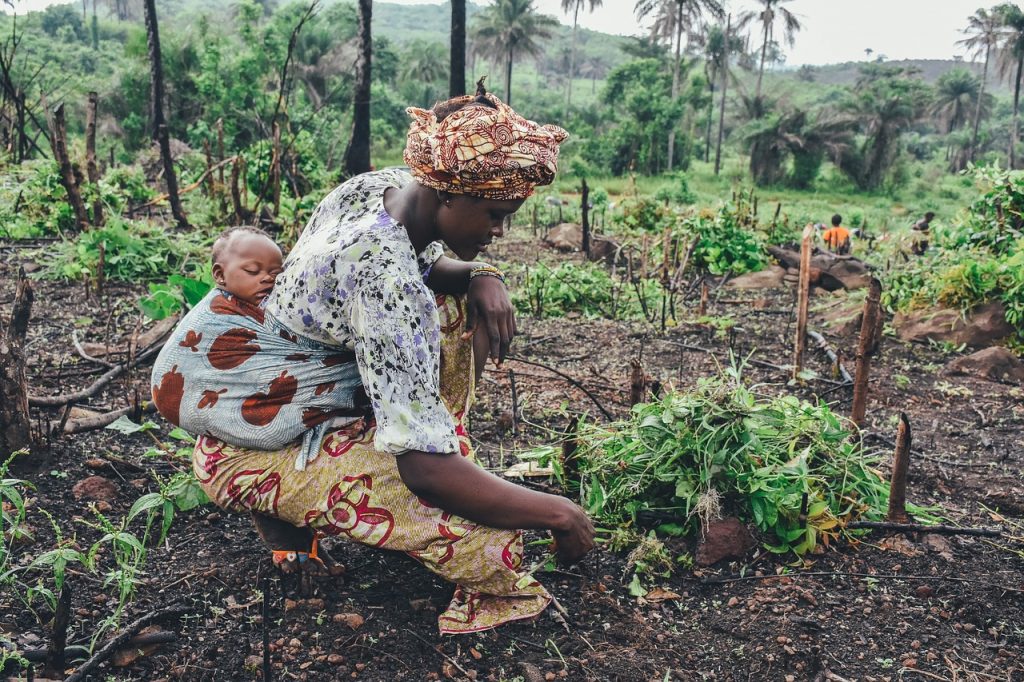
Agriculture employs a substantial share of Ghana’s workforce, and smallholder farmers produce the majority of the country’s staple crops. Yet the sector remains characterized by a paradox: the people producing the food that sustains local and regional markets are frequently among the least able to capture the value their labor creates. Bridging that gap — turning subsistence farming into viable, profitable agribusiness — requires more than good intentions. It requires infrastructure, market access, and sustained partnership.
The Barriers Smallholders Face
A smallholder farmer’s challenges rarely stop at the field. Even a strong harvest can fail to translate into income if a farmer lacks:
- Market access — a reliable buyer willing to purchase at a fair, transparent price
- Storage capacity — the ability to hold produce until market conditions improve
- Quality standards knowledge — an understanding of what grade specifications buyers require
- Aggregation support — a way to combine small individual harvests into the volumes industrial buyers demand
- Working capital — resources to invest in better seed, inputs, and practices for the next season
Individually, none of these barriers is insurmountable. Collectively, they keep many farming households locked in a cycle where farming remains a subsistence activity rather than a scalable business.
A Different Model: Farmer-Centered Value Chains
Comex Africa Limited’s approach to this problem starts from a simple premise: farmers should be treated as long-term partners in the value chain, not just suppliers to be sourced from once a season. In practice, this means building relationships with farmer groups and agricultural communities that extend beyond a single transaction — providing consistent market access season after season, offering guidance on the quality standards that unlock better pricing, and creating the aggregation and storage infrastructure that lets farmers sell on their own terms rather than under pressure.
This model matters because it changes the incentive structure for farmers. When a farmer knows there is a dependable buyer for maize, soybeans, shea nuts, or cashew at a fair, transparent price, the calculation around investing in the next season shifts. Better seed, proper input use, and improved handling practices become worthwhile investments rather than risks with uncertain payoff.
Value Addition as the Next Step
Market access alone captures only part of the available value. Where raw shea nuts might fetch one price, shea butter processed to industry specification commands considerably more in export and industrial markets. Building agro-processing capacity — turning raw commodities into semi-finished and value-added products — allows more of that margin to remain within the local value chain rather than accruing entirely to buyers further downstream.
Why This Approach Scales
The strength of a farmer-centered model is that it compounds. Farmers who trust a market relationship produce more consistently. Consistent, quality-verified supply attracts larger and more reliable industrial buyers. Larger buyer relationships create the volume and stability needed to invest further in processing and storage infrastructure — which, in turn, strengthens the market access available to farmers. It is, in effect, a flywheel: each improvement in market access, quality assurance, or processing capacity makes the next one easier to achieve.
Transforming Ghanaian agriculture from a subsistence activity into a genuine engine of rural economic growth won’t happen through any single intervention. But companies willing to build long-term infrastructure around farmer partnerships — rather than treating each harvest as a one-off transaction — are the ones positioned to drive that transformation at scale.